Why Two SoHo Lofts With the Same Square Footage Can Carry a $250,000 Price Gap
August 27, 2026
August 27, 2026
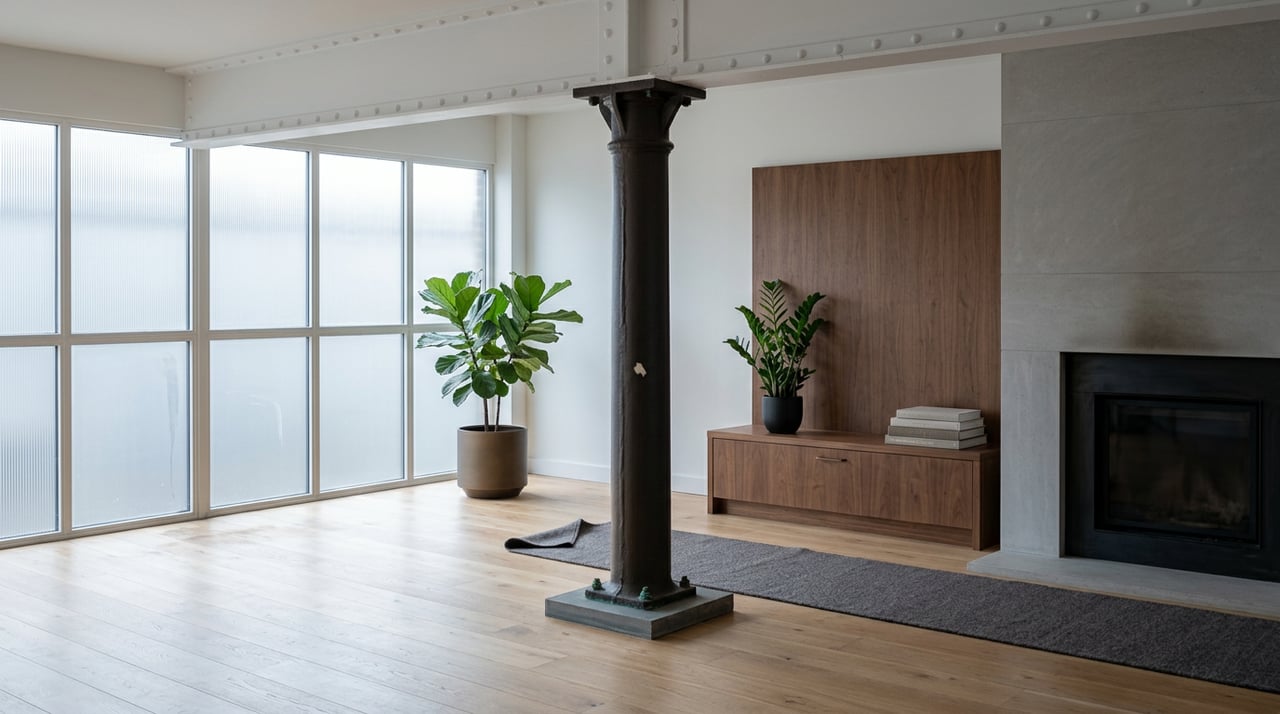
Two lofts on Mercer Street can share a floor plan, a renovation budget, and the same cast-iron facade, and still not be the same purchase. One closes like any other Manhattan condo. The other comes with a live legal condition that can add a quarter million dollars to the cost of ever selling it, refinancing it, or proving you have the right to live there in the first place. The difference has nothing to do with square footage. It is buried in a zoning designation from 1971 that no listing photo will ever show you.
That designation is JLWQA, short for Joint Living-Work Quarters for Artists, and it is the reason a SoHo loft's paperwork deserves the same scrutiny as its layout.
When SoHo's manufacturing buildings started filling with residents in the early 1970s, the city legalized the arrangement on one condition: at least one certified artist had to occupy each unit. Fifty-five years later, most SoHo lofts fall into one of three legal categories, and the category matters more than the finishes.
| Classification | Who can legally occupy it | Cost to convert out of it | Typical financing impact |
|---|---|---|---|
| Standard residential (UG2) certificate of occupancy | Anyone | None, already converted | Treated like a typical Manhattan condo or co-op |
| JLWQA | A city-certified artist, or a non-artist grandfathered in before December 15, 2021 | $100 per square foot, non-refundable, to the SoHo/NoHo Arts Fund | Many national lenders decline; expect 25 to 30 percent down |
| IMD under Loft Board jurisdiction | Any lawful occupant once the unit holds a final certificate of occupancy | None, exempt from the Arts Fund process | Similar to standard residential once the CO is final |
A buyer walking into an open house has no easy way to tell which row applies. The seller's disclosure package does, if you know to ask for it.
The zoning looks stricter on paper than it has been in practice for decades. New York's Department of Cultural Affairs certifies working artists to occupy JLWQA units, but as of 2022, only 36 of the city's 1,636 JLWQA units were actually occupied by someone holding that certification. The city had certified fewer than 100 artists in the decade before that count was taken. A 2026 review of city planning filings puts the share of SoHo and NoHo homes still coded JLWQA on their certificate of occupancy at around 30 percent.
Put those two figures together and the picture is not ambiguous. Roughly a third of the housing stock in SoHo and NoHo carries a legal designation that almost nobody living there actually satisfies. For years that gap was simply tolerated. Banks got more cautious after 2008, co-op boards started asking incoming buyers to sign a letter acknowledging the rule, and city enforcement stayed rare enough that most owners stopped thinking about it. The zoning never disappeared. It sat on the certificate of occupancy, waiting for a sale, a refinance, or a renovation permit to bring it back into the conversation.
For years, owners in this position had reason to hope the fee itself might not survive a legal challenge. The Coalition for Fairness in SoHo & NoHo argued in court that charging $100 per square foot to convert a JLWQA unit amounted to an unconstitutional taking, the kind of permit condition the U.S. Supreme Court has struck down in cases like Nollan v. California Coastal Commission. A trial-level New York Supreme Court judge sided with the city in 2023, but the Appellate Division later reversed course, ruling the fee failed the nexus and proportionality tests those cases require.
That reversal did not survive contact with New York's highest court. On January 13, 2026, the New York Court of Appeals reversed the Appellate Division in a 6-1 vote. The court's reasoning, as The Real Deal reported, was that JLWQA owners never held a protected property interest in converting their restricted unit into an unrestricted one, so the constitutional takings analysis the coalition wanted was never triggered in the first place.
For anyone closing on a SoHo loft this year, that ruling closes a door rather than opening one. The fee is not a temporary irritant working its way through the courts toward elimination. It is the settled cost of converting a JLWQA unit, and it belongs in the budget of an offer, not in a footnote.
The fee does not apply evenly across every JLWQA owner, and that is exactly where a buyer's timeline starts to matter. A 2022 amendment to the state's Multiple Dwelling Law protected anyone who was already a permanent occupant of a JLWQA unit as of December 15, 2021, the effective date of the rezoning. Those owners are treated as meeting the occupancy requirement regardless of whether they hold a certificate from the Department of Cultural Affairs, and a June 2023 settlement between the city and JLWQA owners confirmed they can sell to a non-artist buyer without triggering the Arts Fund payment.
Buy from one of those grandfathered owners today, and the unit's legal status generally carries forward to you as its new non-artist occupant under current law. Buy a JLWQA unit from someone who purchased after December 15, 2021, or plan to convert the unit yourself down the road, and the $100 per square foot contribution is very likely part of your path to a clean certificate of occupancy. The city's Department of Buildings lays out the mechanics of that path, including the option to file a conversion unit by unit rather than triggering a building-wide process, in its guidance on converting a JLWQA unit to residential use.
There is a separate category worth knowing before you write an offer. Buildings that registered with the Loft Board as an interim multiple dwelling, shortened to IMD, follow the state Loft Law instead of the JLWQA framework. Once an IMD unit holds a final certificate of occupancy, the Department of Buildings treats it as exempt from the JLWQA conversion process altogether, artist certification included. Two lofts that look identical from the street can sit on opposite sides of that line.
None of this should scare a serious buyer away from a SoHo loft. It should change what you ask for before you go into contract. Before writing an offer on any loft south of Houston Street, ask your attorney and agent to confirm:
A loft's ceiling height and cast-iron columns are the reason you fell for it. Its certificate of occupancy is the reason you should read the building file before you fall too far.
SoHo will keep drawing buyers who want scale, light, and a piece of the city's industrial history that cannot be built again. That is not changing. What changed in January is that the cost of getting a legacy loft's paperwork wrong is no longer an open legal question waiting on a court to decide. It is a fixed number, and it belongs in your budget from the first walkthrough, not the closing table.
If you are weighing a SoHo loft, or trying to understand what your own JLWQA unit is actually worth to sell, The Holt Team can review the building file with you before you write an offer or sign a listing agreement. Request a Consultation to talk through the specific building, its certificate of occupancy, and what it would take to close with confidence.
Does this affect every SoHo loft? No. Standard residential condos and co-ops, along with IMD units that already hold a final certificate of occupancy, are not subject to the JLWQA conversion fee.
Can a non-artist ever legally live in a JLWQA unit? Yes, if that person was already a permanent occupant on or before December 15, 2021. New occupants who do not meet the Department of Cultural Affairs' artist certification standards generally need the unit converted to standard residential use first.
Is the $100 per square foot fee negotiable? No. It is set by the SoHo/NoHo Arts Fund framework and was upheld as constitutional by the New York Court of Appeals in January 2026, so it functions as a fixed conversion cost rather than a figure open to case-by-case argument.
Does a missing certificate of occupancy always mean a loft is unfinanceable? Not always. Some buildings converted before 1938 never received a formal CO, and a Letter of No Objection can sometimes establish legal use. It does mean the file needs a closer look from a real estate attorney before you remove a financing contingency.
Interested in subscribing to our newsletters? Click below to receive our emails to make sure you never miss a beat (we won't blow up your inbox). Choose from Holt's Trending, Off-Market Listings, Holt's Monthly Market, and Open House List.
The Holt Team is renowned for their unmatched ability to connect buyers with their dream properties and help sellers achieve their real estate aspirations. They understand that the ultimate determination of success is not awards or accolades, but the admiration of their clients. It's this unwavering commitment to client satisfaction that has earned them a loyal following and countless accolades.
88 University Pl 3rd Floor New York, NY 10003