Tribeca Loft Living: Conversions vs New Condos
May 28, 2026
May 28, 2026
Wondering whether a classic Tribeca loft or a newer condo is the better fit for your lifestyle and long-term plans? You are not alone. In a neighborhood where history, architecture, and price all matter, the right choice often comes down to how you want to live day to day, not just what looks best in photos. This guide breaks down how Tribeca conversions and new condos differ, what each tends to offer, and how to think about value in a market where supply is limited. Let’s dive in.
Tribeca is not just another luxury Manhattan neighborhood. Its identity is tied to a relatively small and highly protected collection of former commercial buildings, especially across the neighborhood’s historic districts designated in the early 1990s, with the South district later extended in 2002.
That matters because the supply of true loft product is genuinely limited. In Tribeca, a classic loft is not simply a design trend. It is often the result of a preserved warehouse, store-and-loft building, or mercantile structure that cannot easily be replicated today.
Historic Tribeca conversions usually begin with industrial or commercial bones. Depending on the micro-location, that can mean late-19th-century brick warehouses in North Tribeca, cast-iron store-and-loft buildings in South Tribeca, or larger mercantile buildings in East Tribeca.
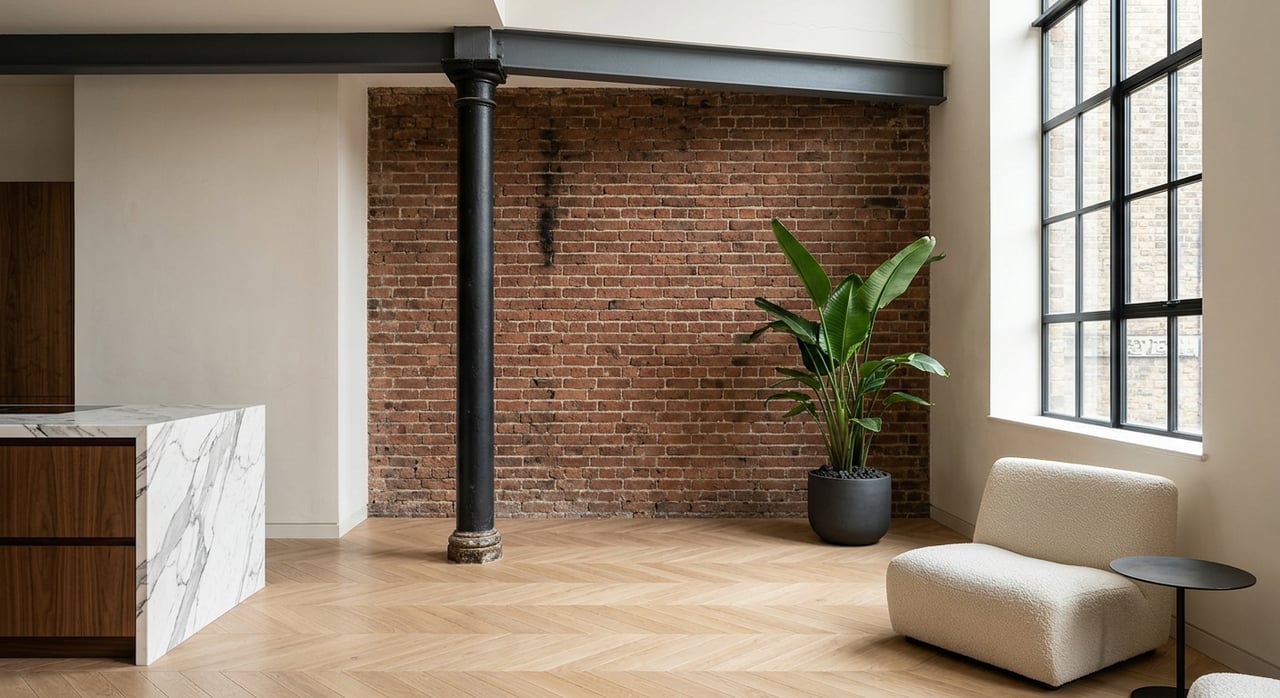
For you as a buyer, that often translates into broader floor plates, oversized windows, visible structure, and layouts that feel more individual than what you find in a modern tower. StreetEasy also notes that these adapted warehouses are known for being large and light-filled, which remains a major part of their appeal.
If you are drawn to loft living, you are usually buying more than square footage. You are buying scale, texture, and a sense of place.
Common features in Tribeca conversions include:
Some recent listings help illustrate that appeal. A residence at 115 West Broadway has marketed 11.5-foot ceilings, while a home at 28 Laight Street has highlighted exposed brick, high ceilings, and oversized windows. In many lofts, the feeling of volume and natural light can matter just as much as the exact square footage.
That character can come with constraints. If a building sits within a historic district or is otherwise landmarked, exterior work is governed by the Landmarks Preservation Commission. According to New York City, alterations, reconstruction, demolition, or new construction affecting landmarked properties require LPC approval.
In practical terms, that means changes to façades or windows may take more time and may be more limited than in a non-landmarked building. You also want to pay close attention to monthly carrying costs, since operating budgets and allocation structures vary by building, and Manhattan condo carrying costs rose 8.6% year over year in Q4 2024.
New condo towers in Tribeca tend to offer a different kind of luxury. Instead of historic texture and one-off layouts, they usually focus on streamlined design, service, amenities, and convenience.
Buildings like 111 Murray show what that looks like in practice. The building features a curved glass façade, full-height windows, open light-filled interiors, and more than 20,000 square feet of amenities, including a 75-foot lap pool, splash pool, spa, fitness center, children’s playroom, and a 24-hour attended lobby.
If your priority is ease of living, a newer condo can be the stronger fit. Many buyers are drawn to a cleaner ownership experience, especially when they want staff, elevators, modern systems, and a fuller amenity package.
New Tribeca condos often appeal because they offer:
For some buyers, this can make the home feel more turnkey. If you want to spend less time thinking about customization and more time enjoying the building, the tower product can be compelling.
Across Manhattan, new-development condos remain a premium segment. Elliman’s Q4 2025 Manhattan report shows a median sale price of $2.285 million, an average price per square foot of $2,597, and 403 closed sales in the quarter.
In Tribeca, that premium matters because new condos compete for the same upper-end buyer pool that values finish quality, service, and views. If you are comparing a modern tower against a landmark loft, you are often comparing two different luxury priorities rather than two versions of the same product.
One of the most interesting shifts in Tribeca is that conversions and new condos no longer sit at opposite ends of the lifestyle spectrum. Some of the best conversions now offer the same kind of service-rich experience buyers expect from new development.
A strong example is 108 Leonard, a landmark Beaux-Arts conversion with more than 20,000 square feet of amenities, including a rooftop terrace, 75-foot pool, fitness center, children’s playroom, chef’s kitchen, private dining room, and entertainment lounge. In other words, you can now find buildings that combine historic architecture with a modern amenity package.
This overlap changes the question you should ask. Instead of simply asking, “Do I want old or new?” it is smarter to ask, “Which building gives me the right mix of character, function, and service?”
A conversion may now offer the amenities you want, while still delivering the proportions and architectural detail that a tower cannot. On the other hand, a new condo may still win if your top priorities are views, sleek finishes, and a highly managed living experience.
Not every part of Tribeca feels the same, and your decision may become clearer once you narrow your preferred area. The neighborhood’s product types cluster in meaningful ways.
North Tribeca, around Laight and Hudson, is known for some of the city’s earliest surviving industrial buildings and large brick warehouses. South Tribeca, around Chambers and Duane, is the classic cast-iron zone. East Tribeca, around Broadway and Franklin, includes larger mercantile-era buildings and notable landmark conversions. Along the west and river edge, view-oriented tower living becomes more visible, including 111 Murray.
Your best fit often depends on how you plan to use the home.
Loft conversions may be the better match if you:
New condos may be the better match if you:
The research also suggests some broad patterns in buyer fit. Design-driven buyers often gravitate toward loft conversions. Families can work well in either product type, though newer condos often stand out when elevators, storage, staff, and kid-friendly amenities are high priorities. Pied-à-terre buyers often prefer modern towers or service-rich conversions where convenience leads the decision.
In Tribeca, long-term value is usually tied to a few core factors: scarcity, usability, and carrying costs. A true loft in a protected historic setting benefits from limited supply, which can support lasting demand.
At the same time, scarcity alone does not guarantee an easy resale. Tribeca remains an expensive and relatively slower-moving market. Public snapshots currently show median sale and list figures ranging from about $3.5 million to $4.5 million depending on source and timing, with median days on market ranging from 52 to 68, and one recent snapshot showing homes selling about 4.53% below asking.
Whether you lean toward a conversion or a new condo, it helps to underwrite the purchase with discipline. In a market like Tribeca, your monthly costs and future buyer pool matter just as much as your first impression during a showing.
Consider these questions:
These are the kinds of details that can help you avoid buying the wrong product in the right neighborhood.
If you picture soaring ceilings, exposed materials, and rooms with architectural personality, a historic conversion may feel irreplaceable. If you want polished service, extensive amenities, and a more seamless ownership experience, a newer condo may make more sense.
In today’s Tribeca market, the answer is rarely about which category is objectively better. It is about which building best supports the way you live, what you value, and how you want your home to perform over time.
If you are weighing Tribeca loft conversions against new condos, the right guidance can save you time and sharpen your search. The Holt Team brings a data-driven, highly personalized approach to Manhattan real estate, helping you compare buildings, costs, and lifestyle fit with clarity.
Interested in subscribing to our newsletters? Click below to receive our emails to make sure you never miss a beat (we won't blow up your inbox). Choose from Holt's Trending, Off-Market Listings, Holt's Monthly Market, and Open House List.
The Holt Team is renowned for their unmatched ability to connect buyers with their dream properties and help sellers achieve their real estate aspirations. They understand that the ultimate determination of success is not awards or accolades, but the admiration of their clients. It's this unwavering commitment to client satisfaction that has earned them a loyal following and countless accolades.
88 University Pl 3rd Floor New York, NY 10003